Kansai Airport Layover: The Waterfall Mountain 33 Minutes From KIX
A Kansai Airport layover beats the shopping mall: 33 minutes and ¥920 from KIX, a mountain of seven waterfalls, plus the bus times no app will show you.
Osaka, Kyoto, and Nara get all the attention, and for good reason. But Kansai is bigger than its three most-photographed cities. This section covers both: the essential city guides you’d expect, and the boat-house villages, mountain towns, and quiet coastlines most English-language guides never mention.
If you’ve already done the temple circuit once, start with one of these two routes:
Ine’s boat houses – 230 wooden houses built with their ground floors open to the sea, on the far north coast of Kyoto Prefecture.
Miyama’s thatched village – the scenery people fly to Shirakawa-go for, about two hours from Kyoto Station, with a fraction of the crowd.
By prefecture: Kyoto – Not just temples. Also home to Ine, two hours north of the crowds. More prefectures go up as I finish verifying them.
A Kansai Airport layover beats the shopping mall: 33 minutes and ¥920 from KIX, a mountain of seven waterfalls, plus the bus times no app will show you.
Osaka Prefecture has exactly one nationally designated historic preservation district, and almost nobody goes. Tondabayashi Jinaimachi is 30 minutes from Tennoji — but its central temple only opens about twelve days a month.
Yamazaki Distillery is fourteen minutes from Kyoto Station, and the same rail spine reaches real Koka ninja country on a branch line that runs about once an hour. Here are the fourteen days the distillery is shut this autumn, the English tour you do not have to win in a lottery, and the printed times that decide whether both halves fit in one day.
Japan has an edamame with an official release date, announced by a city government each autumn. It comes from Tamba Sasayama, a 1609 castle town an hour from Osaka – with an 800-year-old pottery village that almost every English guide sends you to from the wrong station.
Japan’s tallest rock-carved Buddha is 13.8 metres tall, costs 300 yen, and sits five minutes’ walk from a station in eastern Nara that most limited expresses do not stop at. One bus ride away is the temple that admitted women when Mount Koya would not. Two stops down the line is a golden autumn grassland. The printed timetables say you can have two of the three.
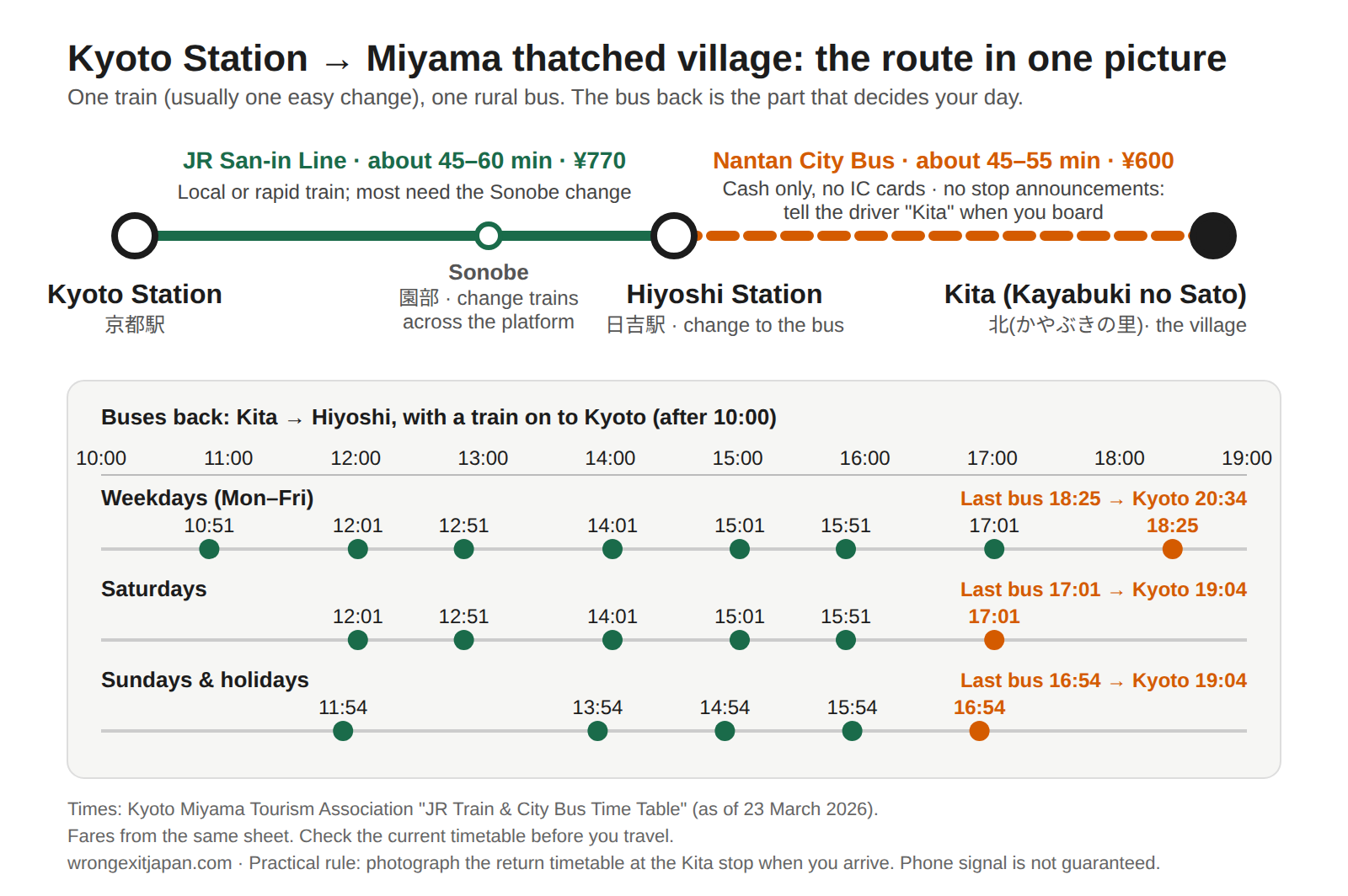
Miyama’s Kayabuki no Sato has Shirakawa-go’s storybook thatched scenery with a fraction of the crowds — just two hours from Kyoto. Here’s how to get there.

How to get from Kyoto to Ine: the JR limited express to Amanohashidate, then the Tango Kairiku Kotsu bus — with the midday timetable gap, the last bus back, and what to do among the 230 boat houses once you arrive.